by adminefeia | Mar 16, 2026 | EHS, EHS Global Census, Women
Start with the mildest cases in the EHS Global Census 2025 — those participants who scored in the lowest symptom range — and women represent about 62% of that group. That proportion is roughly what you’d expect given that women make up 74% of census enrollment...
by adminefeia | Mar 6, 2026 | Biological Effects, EHS, EHS Global Census, Sleep
You’ve probably heard it a thousand times. Eight hours. Seven at minimum. Prioritize your sleep. We live in an era obsessed with sleep duration, where fitness trackers quantify hours logged and wellness culture treats time in bed as the primary indicator of...
by adminefeia | Feb 27, 2026 | EHS, EHS Global Census
You’d expect electromagnetic hypersensitivity to get worse with age. More years alive means more years of exposure, and biology tends to wear down over time, so the assumption writes itself: older people should carry the heaviest symptom burden. The EHS Global...
by adminefeia | Feb 18, 2026 | EHS, EHS Global Census
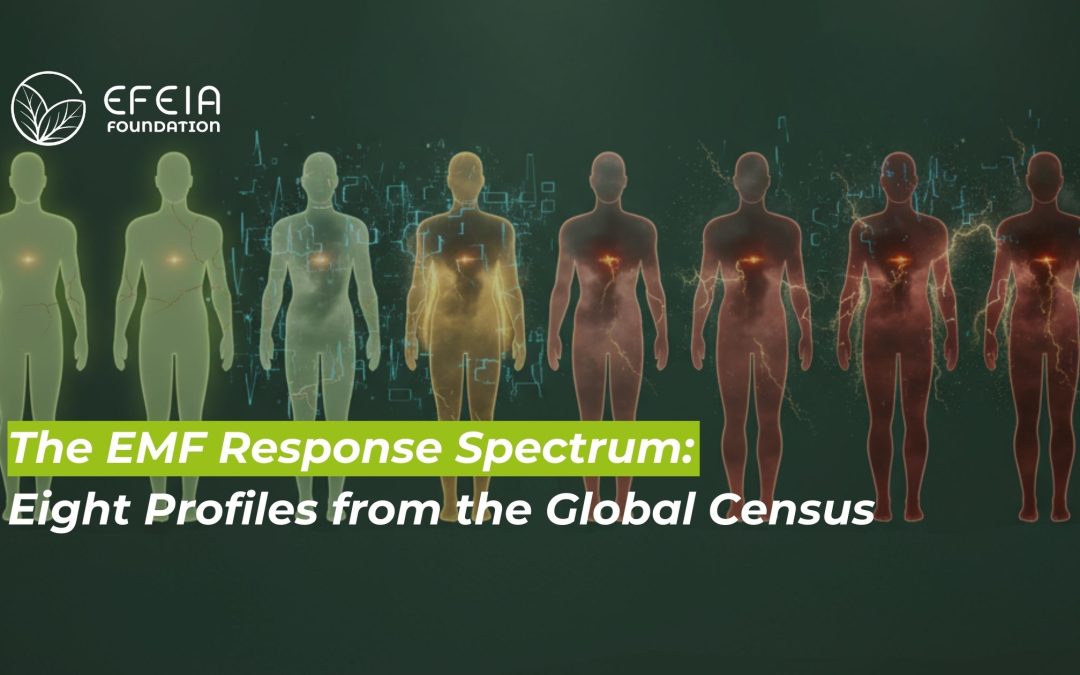
People respond to artificial electromagnetic fields in very different ways. Some live immersed in wireless technology with no apparent consequences. Others have stripped their environment down to the minimum and still suffer debilitating symptoms. Most approaches to...
by adminefeia | Feb 13, 2026 | EHS, EHS Global Census
We included a section in Survey A that seemed almost secondary, but responded to something crucial: do you have sensitivities to things other than artificial electromagnetic fields? 76% said yes. This wasn’t a minor finding buried in the demographics. It turned...
by adminefeia | Feb 10, 2026 | EHS, EHS Global Census
We almost missed this finding. When you run a survey study, incomplete responses are typically treated as a methodological inconvenience. You note the completion rate, acknowledge it as a limitation, and proceed with analysis on whoever finished. The incomplete data...