Science and standards for
a healthier relationship
with technology.
EFEIA is the global foundation advancing science, certification, and standards for electromagnetic hygiene : so people and the environment can coexist with technology on healthier terms.
Understanding electropollution: designing for healthier coexistence
Electropollution is the accumulation of artificial electromagnetic fields from wireless networks, digital devices, and power systems in living and working environments. Unlike natural EMFs, which are part of a healthy world, artificial EMF is a byproduct of modern infrastructure. The body adapts to many things; but continuous, unmanaged exposure to artificial fields is something we can choose to design around.
The scientific evidence base spans more than 4,000 peer-reviewed studies. IARC has classified radiofrequency electromagnetic fields as a Group 2B possible carcinogen, and extremely low-frequency fields as Group 1. This is not a call for alarm. It is a call for informed design. Structured, science-driven standards that let technology and health coexist.
Explore the science
A foundation built on science, not opinion
The Electropollution-Free Environments International Accreditation Foundation is a global nonprofit dedicated to research, education, and certification in electromagnetic hygiene. We bring together scientists, clinicians, engineers, and field practitioners to develop standards that actually reflect biological reality.
Our work spans five research programs covering sixteen projects, a certification program adopted across five countries, and a professional network of 40+ licensed practitioners working in homes, workplaces, and public institutions around the world.
EHS Global Census 2025
The first structured, multi-survey research initiative mapping electrohypersensitivity worldwide. Across three surveys and 537 participants from 20+ countries, the census has generated the most comprehensive EHS dataset in the field.
Key findings include 8 distinct profiles in the EMF response spectrum, an 88% female predominance in severe cases, and sleep disruption accounting for 40.7% of symptom variance, establishing a clear, measurable link between artificial EMF exposure and biological response.
Five pillars. Sixteen projects.
EFEIA's research is organized into five integrated programs, each investigating artificial EMF within a distinct domain. Projects live under their pillar, building on its methods and feeding back into the framework as a whole.
How artificial EMF affects the human body, from population-scale data to clinical phenotypes.
EMF impact on pollinators, soils, livestock, and the broader ecological function of natural systems.
Per-seat exposure characterization inside the vehicles people live in: cars, aircraft, vessels.
Ultraweak photon emission as a biomarker of cellular state. Reading the body's own light.
The physics beneath the field: artificial quantum noise as a distinct exposure category.
BEMCP: The standard for electromagnetically healthy spaces
The Bio-Compatible Electromagnetic Compliance Program certifies buildings, workplaces, and environments that meet EFEIA's electromagnetic hygiene standards. Five tiers. Seven evaluation categories. One seal.
EFEIA's principle for a world built around biological reality
LEDNA : Low Emission Design Near Field Awareness : is EFEIA's foundational framework for designing and certifying electromagnetically healthy environments. It shifts the standard from reactive compliance to intentional design.
Where existing guidelines treat electromagnetic hygiene as an afterthought, LEDNA makes it a first principle. It applies across buildings, workplaces, healthcare facilities, schools, and cities : any space where humans spend sustained time.
Read about the LEDNA Principle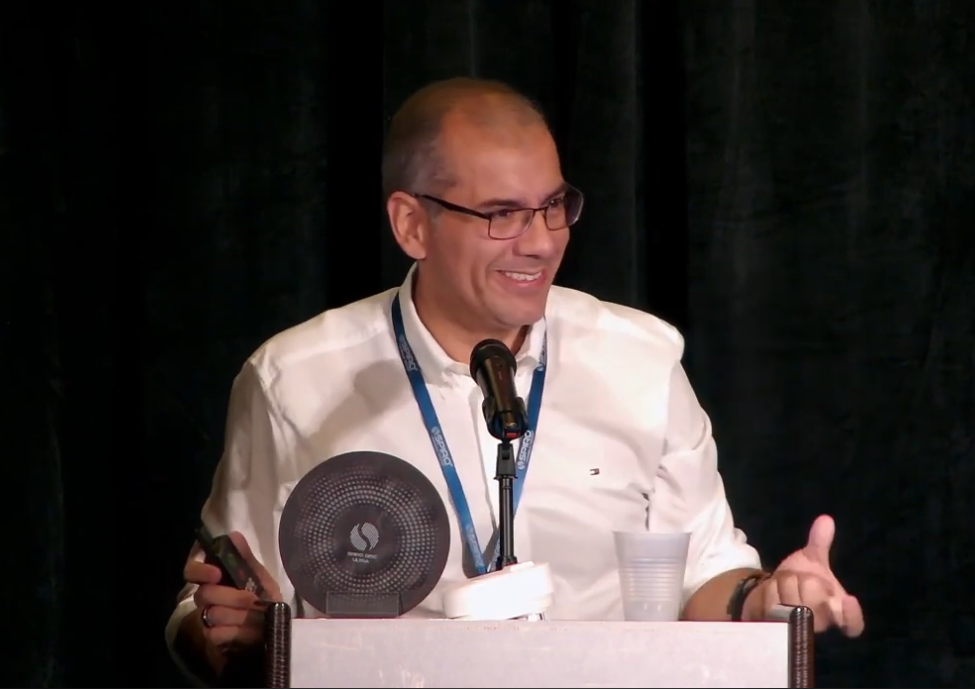
The increase in background levels of microwave radiation is influencing the rise of EHS cases in a worrying way. Today, people with severe EHS approach me daily, whereas in past years these were rare cases. We created EFEIA to educate, research, identify, and help people, and to build a world where technology and well-being can coexist.
There is a role for you here.
Whether you are an individual, a researcher, a professional, or an organization, EFEIA's work depends on participation at every level.
Contribute your experience to the largest EHS research dataset in the world. Your data shapes global awareness and policy.
Start surveyConnect with EFEIA-certified specialists who provide EMF assessments, BEMCP consultations, and electromagnetic hygiene services.
Browse directoryRepresent EFEIA in your country, region, or community. Delegates carry the mission to the ground level and build local awareness.
Apply nowApply for BEMCP certification and earn the EHC Seal : the recognized standard for electromagnetically healthy environments.
Start certification